Why Court Reporting Is Essential for Accurate Legal Documents
Court reporting plays a critical duty in the legal system. It offers an exact, verbatim record of court proceedings. This accuracy is necessary for preserving the integrity of legal procedures. Mistakes in documentation can lead to significant effects for case outcomes. As legal professionals increasingly rely upon these records, understanding the subtleties of court coverage ends up being needed. What factors add to the efficiency of this method in making sure justice?
The Role of Court Reporters in the Legal System
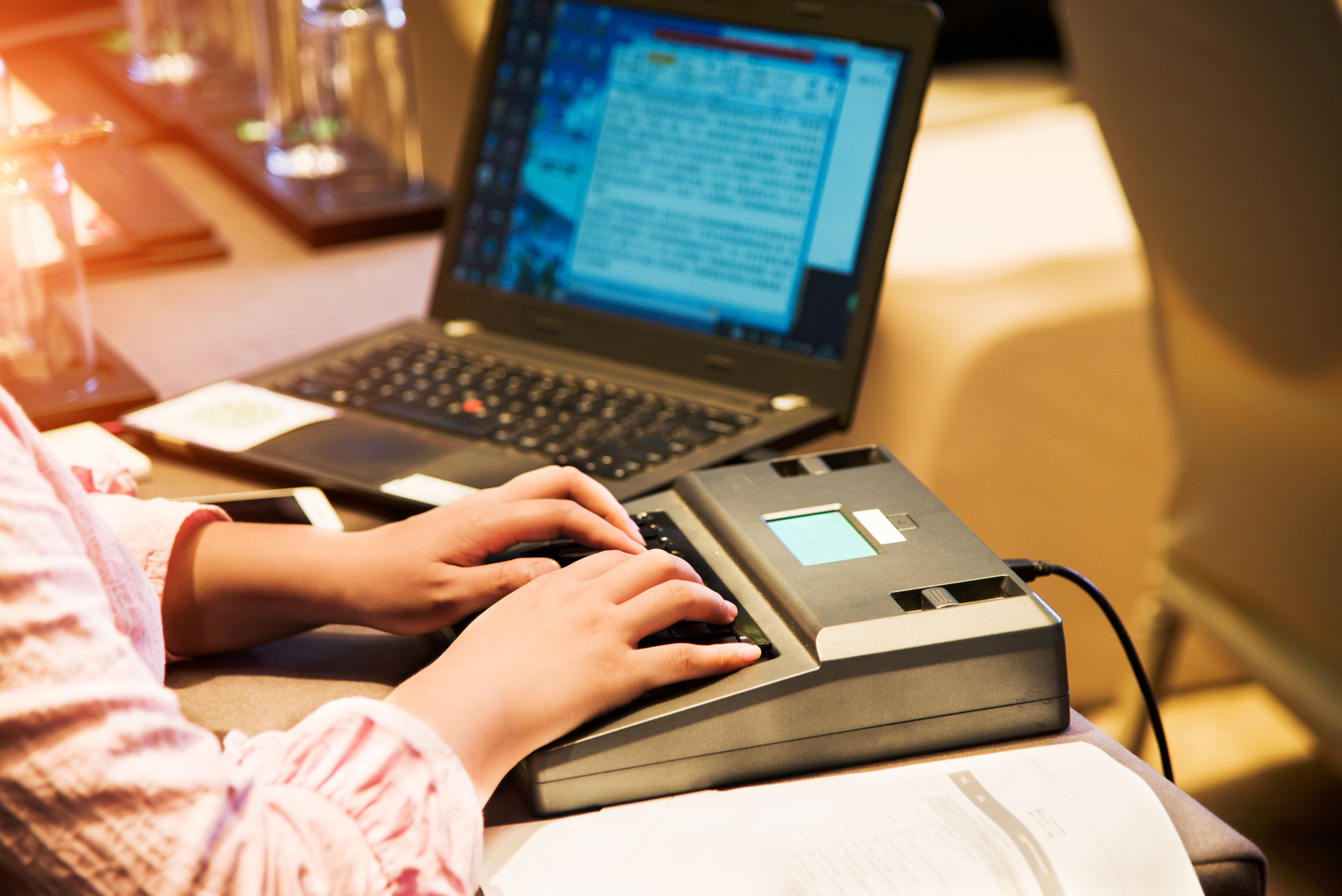
Court reporters work as the crucial web link in between talked statement and written record in the lawful system. They are accountable for catching verbatim accounts of court procedures, assuring that every word talked is precisely transcribed. This transcription ends up being an official record, necessary for charms, lawful study, and preserving the stability of judicial procedures. Stenotype reporter utilize specialized tools and methods, such as stenography, to facilitate this exact paperwork. Their function extends beyond mere transcription; they should comprehend legal terms and court room procedures to ensure clarity and context in their records. Furthermore, court press reporters maintain confidentiality and impartiality, contributing to the general fairness of the lawful process. Their work is important for attorneys, courts, and parties included in litigation, as it provides a reliable account of procedures that can be referenced in future legal actions. Via their proficiency, court reporters maintain the requirements of justice within the lawful system.
Ensuring Accuracy in Legal Transcripts
Keeping precision in lawful transcripts is extremely important to the integrity of judicial procedures. Court press reporters play a crucial role in catching every talked word during trials, depositions, and various other legal settings. Their expertise in stenography and knowledge with lawful terminology guarantee that records reflect the exact discussion and nuances of the instance. Any type of omissions or errors can result in false impressions, which may adversely impact the results of legal conflicts.
To attain this level of accuracy, court reporters use sophisticated technology and extensive training to improve their transcription skills. They also participate in extensive evaluation processes, cross-checking their benefit precision before finalizing files. Additionally, guaranteeing proper context and audio speaker identification adds another layer of integrity to the transcripts. Inevitably, precise legal records function as foundational papers that maintain the justice system, enabling all celebrations included to rely upon an accurate document of process.
The Value of Real-Time Reporting
Real-time coverage has become a significant advancement in the field of court reporting, boosting the effectiveness and ease of access of legal process. This modern technology permits stenotype reporter to transcribe spoken dialogue instantly, offering instant accessibility to records for attorneys, courts, and various other legal workers. With real-time reporting, individuals can quickly review arguments and statements, facilitating even more educated decision-making during procedures.
Furthermore, this capability is especially beneficial in intricate instances where fast understanding of information is important. It advertises clearer interaction amongst all events, lowering the likelihood of misconceptions. In addition, real-time records can be shared from another location, benefiting those incapable to go to in individual, consequently expanding accessibility to justice. As legal atmospheres end up being try this increasingly vibrant, the function of real-time coverage in making certain precise and prompt details dissemination can not be overstated, making it a vital tool in modern-day court reporting practices
Legal Paperwork and Its Effect On Instance Outcomes
Efficient lawful documentation plays a necessary duty fit instance results, because it acts as the structure whereupon lawful arguments are built. Accurate documents assure that all significant truths, testament, and evidence are plainly provided, enabling attorneys to build compelling instances. Errors or omissions in documentation can bring about misconceptions, which might negatively affect the court's decision.
Efficient documents assists in reliable instance administration, enabling lawyers to promptly reference critical information throughout proceedings. Juries and juries count heavily on documented proof to understand the context and nuances of a situation. Consequently, the quality of legal documents straight affects the credibility of debates offered in court.
Eventually, comprehensive and accurate legal documentation not just improves the chances of favorable outcomes but also news supports the stability of the legal process, guaranteeing that justice is offered accurately and fairly.
Developments in Court Coverage Technology
As modern technology continues to develop, developments in court reporting have actually considerably transformed exactly how lawful paperwork is created and handled. Developments such as real-time transcription software enable stenotype reporter to provide immediate access to transcripts, boosting the effectiveness of lawful process. Digital videotaping systems have also emerged, offering a trustworthy back-up to typical methods, while expert system is progressively being incorporated right into the paperwork process, improving precision and lowering human mistake.
Cloud-based platforms promote safe sharing and storage of court documents, making certain that legal groups can access essential data from anywhere. Remote court reporting has actually become commonplace, permitting lawyers to get involved in process regardless of geographical location. These technical improvements not only streamline the court reporting process but also boost the overall integrity of lawful documentation. As a result, the legal area is much better furnished to fulfill the demands of contemporary lawsuits, making sure that justice is offered successfully and efficiently.
Frequently Asked Inquiries
What Certifications Do Court Reporters Commonly Required?
Court press reporters typically require a high school diploma, specialized training Discover More Here in court coverage, and effectiveness in shorthand or voice writing. Certification and licensure needs differ by state, enhancing their credibility and ensuring professional requirements are fulfilled.
Exactly How Do Court Reporters Maintain Privacy?
Stenotype reporter keep privacy by adhering to rigorous honest guidelines, using safe techniques for keeping and sending records, and making certain sensitive details is shared just with authorized people associated with the legal proceedings.
Can Court Reporters Job in Other Setups Besides Courts?
Stenotype reporter can undoubtedly operate in different settings beyond courts, consisting of depositions, service conferences, and legislative assemblies. Their abilities in recording talked language properly make them important in any environment calling for accurate documentation.
What Is the Typical Wage of a Court Reporter?
The average wage of a court press reporter differs extensively, usually ranging from $50,000 to $100,000 every year, depending upon factors such as experience, area, and the specific market in which they are employed. (durham court reporting)
The length of time Does It Require To Come To Be a Licensed Court Reporter?

Court press reporters serve as the vital link between spoken testament and written document in the lawful system. In enhancement, court press reporters preserve discretion and impartiality, adding to the total justness of the lawful procedure. Technologies such as real-time transcription software application permit court press reporters to supply instantaneous access to records, enhancing the performance of legal proceedings. Court press reporters usually need a high institution diploma, specialized training in court coverage, and proficiency in shorthand or voice writing. Court reporters can without a doubt function in different settings beyond courts, consisting of depositions, organization meetings, and legislative assemblies.